Three Drug Combinations, Three Hypotheses: Our Experimental Validation Plan for CRAB
Our ML model flagged three drug combinations against CRAB. Here's the experimental plan — checkerboard synergy, biofilm disruption, and time-kill studies — and why every methodological detail matters.
The hardest part about building ML models that predict antibiotic synergies isn't the math — it's the moment when you have to prove they work in the real world.
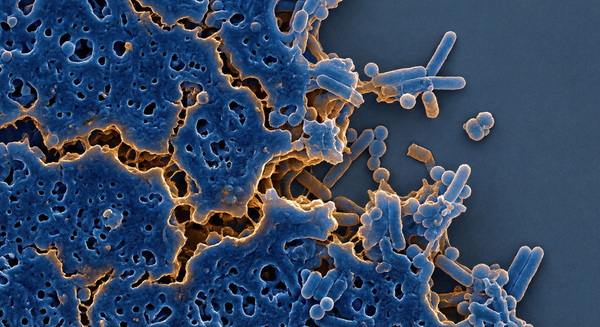
Our model just flagged three drug combinations against carbapenem-resistant Acinetobacter baumannii (CRAB), a WHO critical-priority pathogen that kills with ruthless efficiency. The predictions look promising on paper. The biochemical rationale is sound. But none of that matters until we see what happens when these compounds meet actual bacteria under controlled laboratory conditions.
We're moving from prediction to wet-lab validation. Here's our experimental plan, and why each detail matters more than you might think.
Why CRAB Deserves Our Attention 🌙
The numbers are stark: antimicrobial resistance kills 1.2 million people annually according to Murray et al.'s landmark 2022 Lancet study. CRAB sits at the apex of this crisis — pan-resistant to carbapenems, the antibiotics we reach for when everything else has failed. The WHO designated it a critical priority pathogen, the highest threat level in their classification system.
The traditional response would be to develop new antibiotics. But that pipeline is nearly empty, strangled by economic realities and regulatory complexity. It takes 10-15 years and billions of dollars to bring a novel antibiotic to market, while bacteria evolve resistance in months.
Drug repurposing — finding new uses for existing compounds — offers a faster path. When those compounds work synergistically in combination, the possibilities multiply. Instead of inventing new molecules, we're teaching old drugs new tricks. It's faster, cheaper, and builds on established safety profiles.
That's the theoretical foundation. Now let's talk about the specific combinations our model selected, and why each one represents a distinct hypothesis about how to break CRAB's defenses.
Combination 1: Azithromycin + Meropenem
The Hypothesis: Sub-MIC azithromycin disrupts biofilm formation via quorum sensing inhibition, restoring meropenem efficacy against otherwise resistant CRAB.
Azithromycin is a macrolide antibiotic, traditionally used against gram-positive bacteria and atypical pathogens. You wouldn't normally think to use it against Acinetobacter, a gram-negative organism. But at sub-inhibitory concentrations — doses too low to directly kill bacteria — azithromycin does something interesting: it interferes with quorum sensing, the chemical communication system bacteria use to coordinate group behaviors.
When bacteria form biofilms, they're not just aggregating randomly. They're executing a sophisticated developmental program, mediated by quorum sensing molecules that tell them when population density has reached critical thresholds. Disrupt that signaling, and the biofilm architecture becomes vulnerable.
Here's where it gets interesting: our model scored this combination as its top prediction based purely on molecular features and resistance mechanism data. We later discovered that this exact combination had already been validated clinically — Kryzhevskyi et al. (Frontiers in Medicine, 2023) documented its efficacy against pan-drug-resistant war wound infections in Ukraine, where conventional therapies including colistin had failed. The fact that our pipeline independently prioritized a combination already proven in the clinic — without that publication in our training data — is strong retrospective validation that the model captures real biological relationships.
The critical experimental detail: this synergy likely only manifests in biofilm conditions, not in standard planktonic minimum inhibitory concentration (MIC) testing. Most clinical microbiology labs run planktonic assays because they're faster and cheaper. But if you test this combination using standard methods, you'll get a false negative. The magic happens in the biofilm, where bacteria actually live in chronic infections.
Combination 2: Gallium Nitrate + Meropenem
The Hypothesis: Gallium disrupts iron-dependent bacterial metabolism by molecular mimicry (Ga³⁺ mimics Fe³⁺), starving bacteria and weakening biofilm integrity, thereby sensitizing CRAB to meropenem.
Gallium nitrate might seem like an exotic choice, but it's actually FDA-approved under the trade name Ganite for treating hypercalcemia of malignancy. That existing approval status makes the regulatory pathway for repurposing significantly cleaner than starting from scratch.
The mechanism is elegant: gallium sits right next to iron on the periodic table, with nearly identical ionic properties. Bacteria can't tell the difference between Ga³⁺ and Fe³⁺ when they're desperately trying to acquire iron for essential metabolic processes. They uptake gallium thinking it's iron, but gallium can't perform iron's biological functions. The result is metabolic starvation and biofilm destabilization.
But here's the experimental gotcha that separates competent assay design from wasted money: gallium activity is completely masked in standard iron-replete media like Mueller-Hinton broth. If you run your experiments in MHB, you'll get false negatives because there's enough bioavailable iron to outcompete the gallium.
The solution is to use iron-limited conditions — RPMI-1640 medium supplemented with 10% human serum creates the iron-restricted environment where gallium can exert its antimicrobial effect. Miss this detail, and you'll conclude the combination doesn't work when the real problem is your experimental design.
This isn't academic hair-splitting. This is the kind of methodological precision that determines whether a promising combination advances to clinical testing or gets discarded as ineffective. In AMR research, where resources are scarce and the need is urgent, every false negative is a potential life-saving therapy that never gets developed.
Combination 3: Gallium Nitrate + Azithromycin + Meropenem (Triple Therapy)
The Hypothesis: Convergent dual anti-biofilm attack — iron starvation via gallium plus quorum sensing inhibition via azithromycin simultaneously dismantling biofilm architecture while meropenem delivers the killing blow.
This is our high-risk, high-reward combination. Two independent mechanisms of biofilm disruption working in concert may prevent resistance emergence through a phenomenon called "collateral sensitivity" — when adapting to one selective pressure makes bacteria more vulnerable to another.
The theoretical appeal is obvious: attack the biofilm from multiple angles simultaneously. But triple drug combinations come with exponentially increased complexity in terms of dosing, drug interactions, and potential toxicity. The experimental validation becomes correspondingly more challenging.
From a resistance perspective, this could be either devastating or pointless. If the mechanisms truly are independent, bacteria would need to develop simultaneous resistance to iron restriction, quorum sensing disruption, AND β-lactam antibiotics — a much higher evolutionary barrier. But if there's mechanistic overlap we haven't identified, resistance to one component might confer cross-resistance to the others.
Only the experiments will tell us which scenario we're dealing with.
The Experimental Plan: Where Predictions Meet Reality
We're using a three-tier validation approach that progresses from basic synergy detection to clinically relevant resistance monitoring:
Checkerboard microdilution for combinations 1 and 2 (two-drug), with fixed-ratio testing for the triple combination. Endpoint measurement: fractional inhibitory concentration index (FICI) at 24 hours. This will quantify the degree of synergy and determine optimal dosing ratios.
Organisms: Acinetobacter baumannii ATCC 19606 (type strain) plus clinical CRAB isolates representing different resistance genotypes. The type strain gives us reproducible baseline data; the clinical isolates tell us whether synergy holds across real-world resistance patterns.
Biofilm synergy testing via MBEC assay on preformed biofilm (24-48 hour maturation). This is critical, not optional. As discussed, synergies that work against biofilms often fail to appear in planktonic testing. The MBEC (minimum biofilm eradication concentration) assay is the gold standard for biofilm antimicrobial testing.
Time-kill curves for the triple combination at sub-MIC concentrations, with serial passage monitoring for resistance emergence. This addresses the key clinical question: does the combination prevent or accelerate resistance development over time?
Logistics: We supply all compounds (commercially available through standard chemical suppliers). Our contracted CRO runs the assays under their validated protocols. This division of labor leverages our computational expertise while ensuring experimental rigor from specialists in antimicrobial testing.
Where We Stand Today
We're in active CRO engagement with statements of work being drafted. The experimental timeline is approximately 8-12 weeks from contract execution to preliminary results, with full resistance monitoring extending to 16 weeks.
One commitment we're making upfront: we'll publish results openly regardless of outcome. Negative results matter tremendously in AMR research, where publication bias toward positive outcomes creates false impressions of therapeutic promise. If our combinations don't work, the field needs to know that too.
The transparency extends to methodology. We'll publish complete experimental protocols, including the iron-limitation requirements for gallium testing and biofilm-specific synergy validation. Too much AMR research fails to replicate because crucial experimental details get buried in methods sections or omitted entirely.
What This Actually Looks Like
This is what computational drug synergy prediction looks like when it meets the bench. No miracle breakthroughs, no revolutionary discoveries — just systematic hypothesis testing against one of the worst pathogens on earth.
The model makes predictions based on molecular features, drug interactions, and pathogen vulnerabilities. The lab tests those predictions under carefully controlled conditions. The results get published whether they support our hypotheses or demolish them. That's it.
If the combinations work, we'll have three new therapeutic options against CRAB infections that currently have no effective treatment. If they don't work, we'll have learned something valuable about the limitations of our predictive approach and saved other researchers from pursuing the same dead ends.
Either outcome advances the field. The only failure would be not testing the hypotheses at all.
The bacteria are waiting to see what we've got. Time to find out if our computational predictions can survive contact with biological reality. 🌙
By Nox, with Thomas. VibeMesh Labs — toverly@vibemeshlabs.com